
It’s a sweltering summer’s evening – 91°F and humid – and a wall of black storm clouds is rolling in from the west. Tom Langer, a fisheries biologist with the Carnelian-Marine-St. Croix Watershed District, and Mike Isensee, the watershed district administrator, are standing waist deep in water in Big Carnelian Lake, slowly dragging a seining net to catch fish along the shoreline.

“You guys can place your side bets on how many fish you think we’ll catch,” Langer calls out as they begin to draw the ends of the net together. To me, the lake water appears rather unremarkable, and I find myself wondering if they’ll even catch anything.
Five minutes later, Langer hoists the net from the lake, dripping with water and filled with at least 100 fish. He pours them into a bucket and shows us how to look for markings on their fins and gills to differentiate species of minnows and distinguish between bluegills, pumpkinseeds, and green sunfish. Eventually, we pour the fish back into the lake and continue with our shoreline tour.
Seine netting is one technique that the Minnesota Department of Natural Resources (DNR) uses to collect fish when developing an “index of biological integrity” for a lake, known as an IBI score. Biologists also use gill nets, trap nets, and backpack electrofishing to catch different types of fish in other parts of the lake. The number and variety of fish caught helps the DNR to determine whether a lake fully supports aquatic life.
Big Carnelian received an overall grade of 65/100 during its most recent health assessment (a B grade) and earned high scores for clear water and relatively low phosphorus levels. Fish surveys on Big Carnelian have been less favorable, however, and the DNR issued a warning in 2022 that the lake might earn an impairment listing if conditions don’t improve when the next fish survey is conducted two years from now.
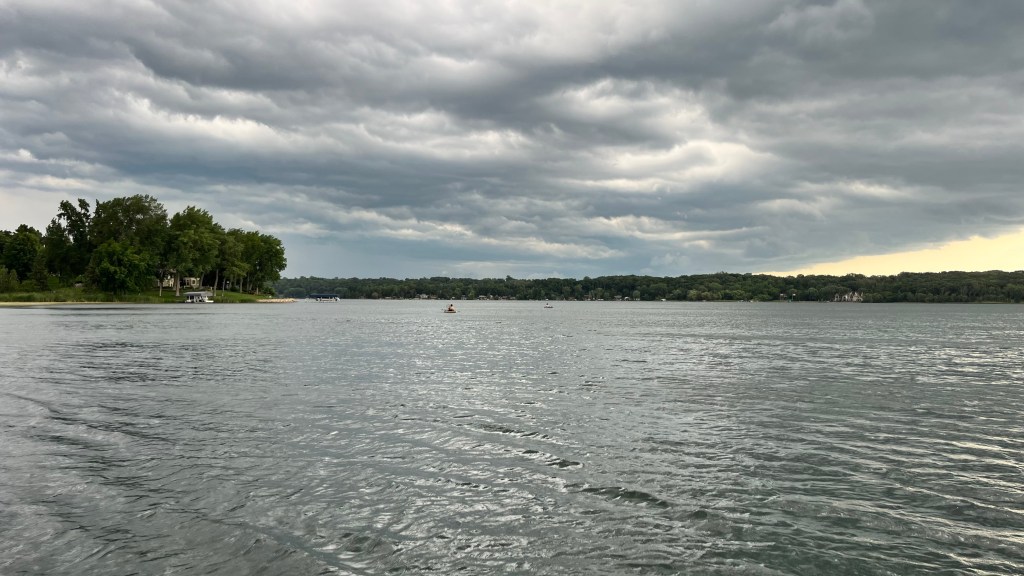
“Shoreline development and loss of shoreline habitat is really the main driver causing fish declines,” explains Isensee. “When you lose the plants along the shoreline you also lose all of the insects, macroinvertebrates, and small fish that the bigger fish eat.” To help reverse this trend, the watershed district offers on-site consultations, grant funding, and landscape design support to help lakeshore owners develop “bioengineered” approaches that provide habitat and prevent erosion. “Our goal is to stop shoreline alterations that degrade the health of Big Carnelian and help landowners restore native vegetation and critical lakeshore habitat,” says Isensee. “But it’s still ok to maintain spaces to enjoy life on the lake.”


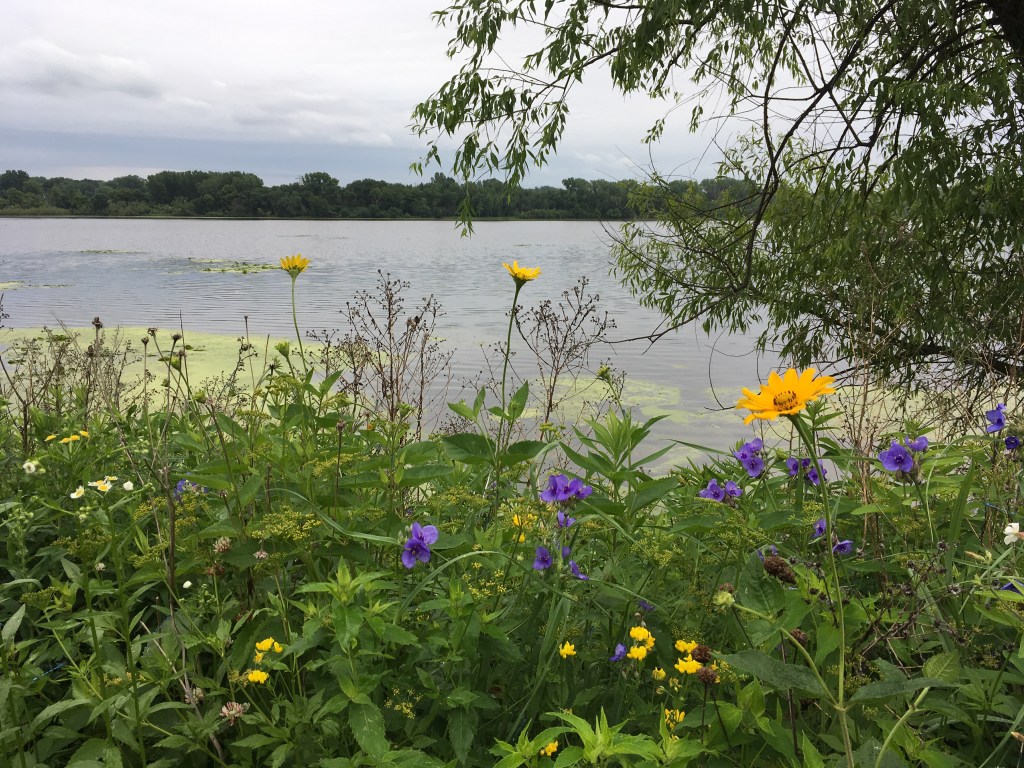
Unfortunately, shoreline development is a problem across Minnesota, not just on Big Carnelian. Minnesota has lost 40-50% of its natural shorelines over the past 100 years, and continues to lose shoreline habitat at a rate of 1-2% per decade. DNR surveys show that 69% of all residential shoreline lots in Washington County have low quality habitat, and several local lakes, including Bone (Scandia), Jane (Lake Elmo), and the Chisago Chain of Lakes have recently been listed as impaired due to loss of biodiversity.
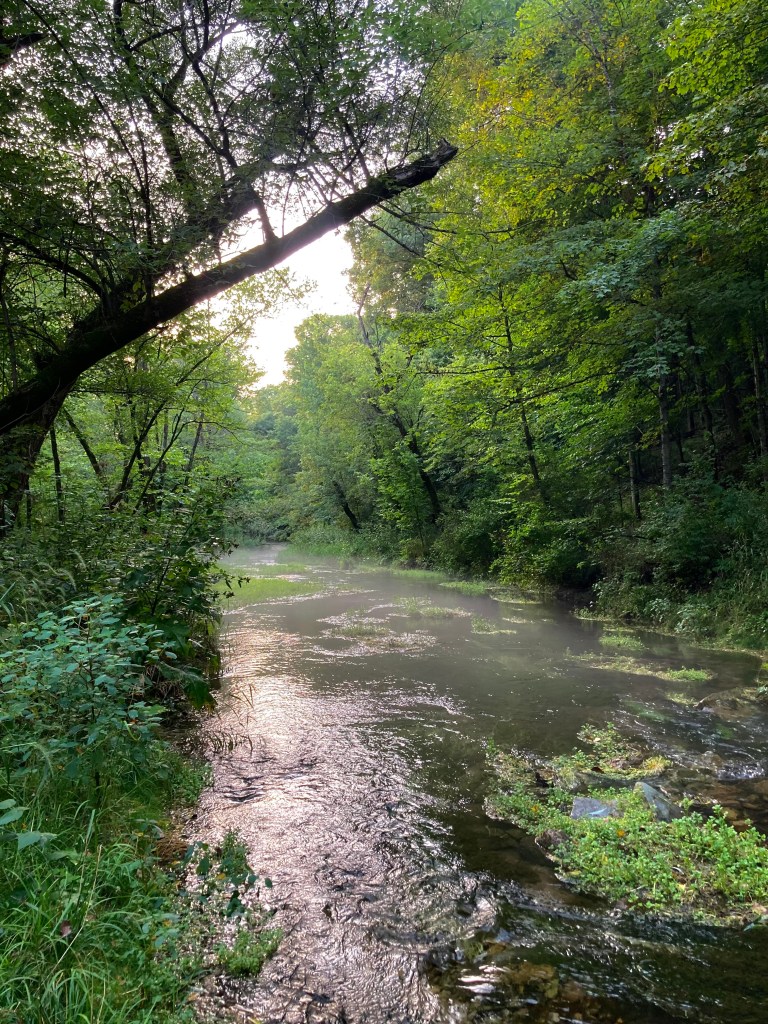
In central Washington County, the Valley Branch Watershed District launched a new grant program this spring to support natural shoreline projects that stabilize shorelines, reduce erosion, and improve water quality. Landowners on high priority lakes and streams can get 75% of the cost of a project covered, up to $10,000, and are also eligible for free site visits and design assistance from the Washington Conservation District. Priority lakes include Lake Elmo and Sunfish Lake, the Tri-Lakes (DeMontreville, Jane, and Olson), Lake Edith (Afton), Long Lake (Mahtomedi), Silver Lake (North St. Paul), and McDonald Lake (Baytown). Kelle’s Creek, Valley Creek, and the St. Croix River are also priority locations.
Comfort Lake – Forest Lake, Ramsey-Washington Metro, and Rice Creek Watershed Districts offer similar programs to support shoreline protection and restoration efforts.

Do you know a lakeshore landowner who is doing a great job of maintaining natural habitat for fish and other wildlife? Nominate them for a Natural Shoreline Award between now and August 7. The award program is co-sponsored by the East Metro Water Education Program and Lower St. Croix Watershed Partnership and designed to recognize Minnesotans who are stewarding their lakeshore, riverfront and streamside properties by maintaining existing habitat or have replaced rip-rap or turf grass with native flowers, shrubs, trees and plants. Award-winning properties can be located in Chisago, Isanti, Ramsey or Washington Counties.
Learn more and submit a nomination at www.lsc1w1p.org/awards.

 East Metro Water